Access Flap Surgery (Implants)
Decontamination-only surgery — no bone alteration or grafting. For shallow defects without resective or reconstructive indication.
Use case: shallow defects without containing walls or where the patient is unsuitable for resective/reconstructive procedures (R8.6).
Evidence Guidelines & evidence
- EFP S3 R8.6
Where end points of non-surgical therapy have not been achieved, we recommend performing access flap or resective surgery as both modalities are effective.
- EFP S3 R8.7
In the surgical management of osseous defects, access flap with or without reconstructive procedures may be considered; no evidence demonstrating superiority of any specific surgical technique.
1 Flap elevation & access
Mucoperiosteal flap to expose the affected implant surface. Conservative full-thickness reflection. Confirm no resective or reconstructive indication during inspection.
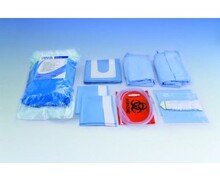
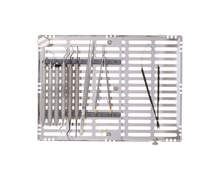
2 Surface decontamination
Mechanical removal of biofilm and calculus from the exposed implant surface. Gauze + saline, titanium curettes for mineralised deposits. Titanium brushes may be considered (R8.11). Do NOT use air polishing, Er:YAG laser, chlorhexidine, or photodynamic therapy (R8.11/R8.12).
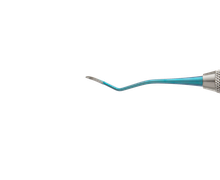
3 Soft tissue management
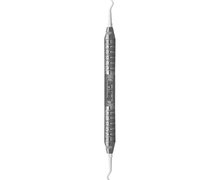
Granulation tissue removal. No osseous recontouring or grafting at this step. The defect is left to heal under the repositioned flap.
4 Wound closure
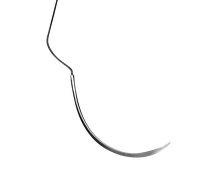
Reposition flap at the existing crestal level with fine sutures. Microsurgical technique improves closure quality.
5 Post-operative healing
Standard post-op care, suture removal at 7–10 days. Probing at 6 months; radiographs at 12 months (R8.3).