Resective Surgery (Implants)
Suprabony / horizontal defects.
Implantoplasty: There is insufficient evidence to make any recommendation (R8.11 §3).
Evidence Guidelines & evidence
- EFP S3 R8.6
Where end points of non-surgical therapy have not been achieved, we recommend performing access flap or resective surgery as both modalities are effective.
- EFP S3 R8.11
We suggest not to use air-polishing or Er:YAG laser for implant surface decontamination during surgical treatment. Titanium brushes may be considered as an alternative/adjunct. Insufficient evidence regarding implantoplasty.
- EFP S3 R8.12
We suggest not to use chlorhexidine or photodynamic therapy for implant surface decontamination during surgical therapy.
1 Flap elevation & access
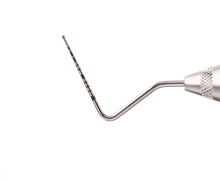
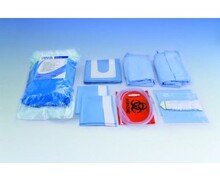
Apically repositioned flap to access the implant surface and remove inflamed tissue. Confirm suprabony / horizontal defect morphology clinically and radiographically.
2 Surface decontamination
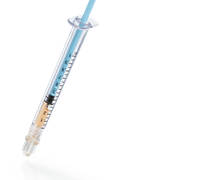
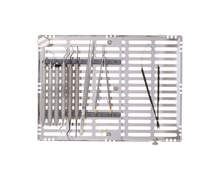
Mechanical removal of biofilm and calculus from the exposed implant surface. Gauze soaked in saline, curettes for mineralised deposits. Do NOT use air polishing or Er:YAG laser for surface decontamination (R8.11). Do not use chlorhexidine or photodynamic therapy (R8.12). Titanium brushes may be considered as alternative/adjunct.
3 Osseous recontouring
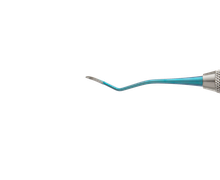
Reshape alveolar bone to eliminate pockets and achieve a maintainable supra-crestal anatomy.
4 Implantoplasty
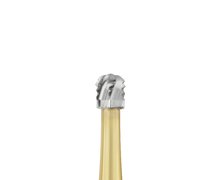
Remove threads and the roughened surface to create a smooth, cleanable implant surface. Sequence: Diamond bur → Carbide bur → Arkansas stone → Silicone polisher. Note: insufficient evidence exists for or against implantoplasty (R8.11 §3).
5 Wound closure & healing
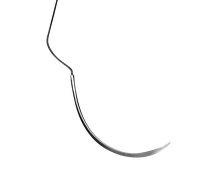
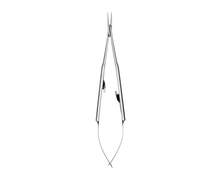
Suture placement and post-operative healing protocol. Microsurgical technique with fine sutures improves primary closure quality and reduces tissue trauma.
—