
Surgical Approach (Step 3)
Select based on defect morphology. Repeat subgingival instrumentation may resolve shallow residual pockets without surgery (R6.1).
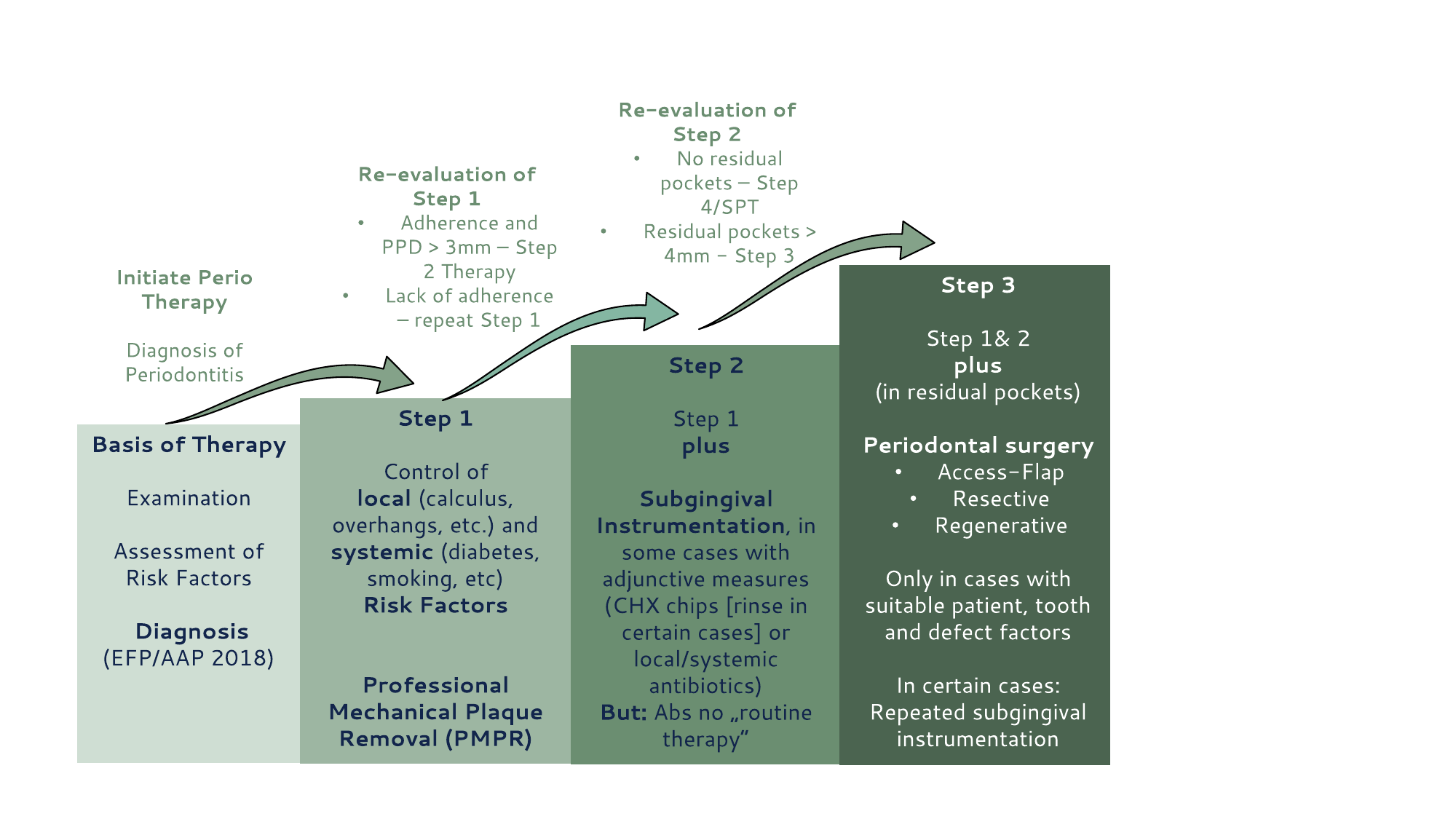
Surgical periodontal therapy in non-compliant patients without adequate plaque control is not recommended.
Evidence Guidelines & evidence
- EFP S3 R6.1
For sites with residual probing depths ≥ 4 mm with BOP or with deep residual probing depths (PD ≥ 6 mm), repeated subgingival instrumentation may be performed in step 3.
1 Pre-surgical prerequisites
Adequate self-performed OH and demonstrated compliance are required. Adjust prosthetic factors that block hygiene access. Surgical periodontal therapy should be provided by clinicians with specific training (R6.2).
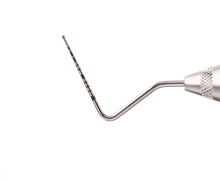
2 Select approach by defect morphology
Access flap → residual moderate pockets (PD 4–5 mm) without intrabony defect (R6.2). Resective → suprabony / horizontal defects, apically positioned flap ± osseous recontouring (R6.4). Regenerative → intrabony defects ≥ 3 mm with 2–3 containing walls, bone graft ± membrane (R6.3).
3 Repeat instrumentation as alternative
For shallow residual pockets (PD = 5 mm with BOP) or where access is the limiting factor, repeat subgingival instrumentation may resolve disease without surgery (R6.1).
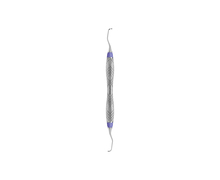
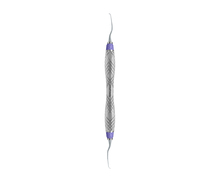
Your decision
- Residual PD 4–5 mm
- No intrabony defect
- Compliant patient
- Suprabony defect
- Horizontal bone loss
- Pocket elimination indicated
- Intrabony defect ≥ 3 mm
- 2–3 containing bony walls
- Compliant patient